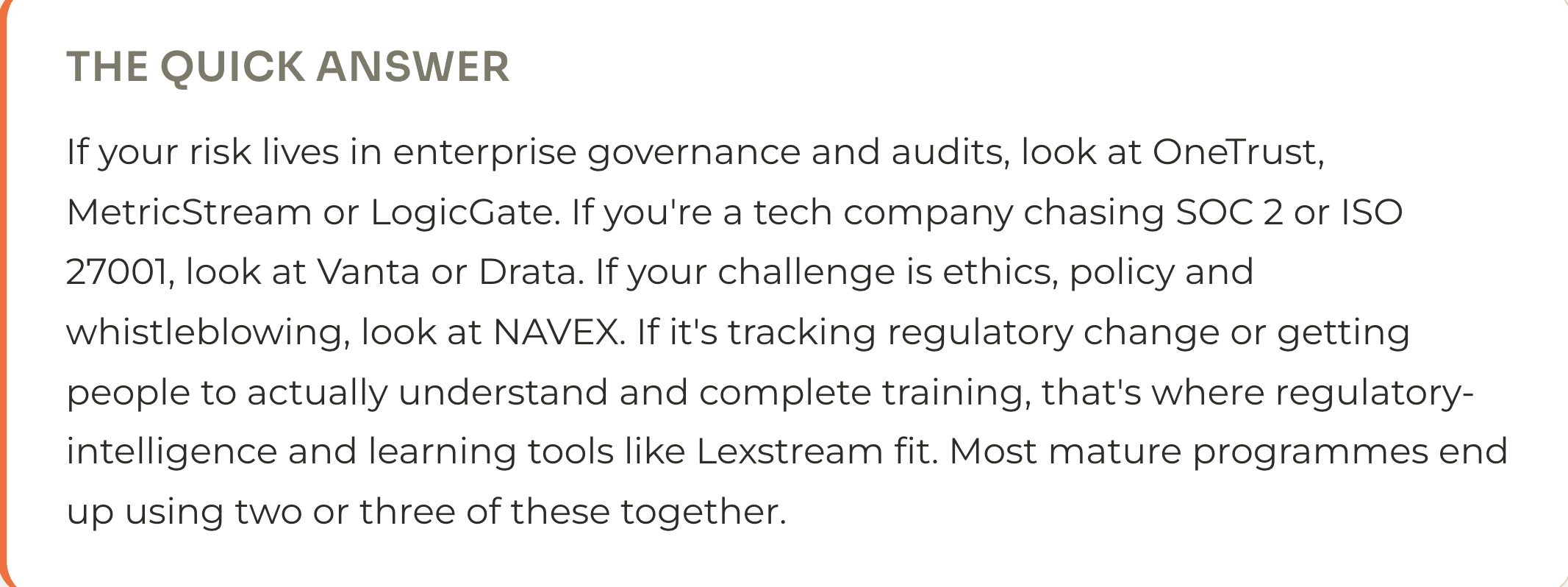
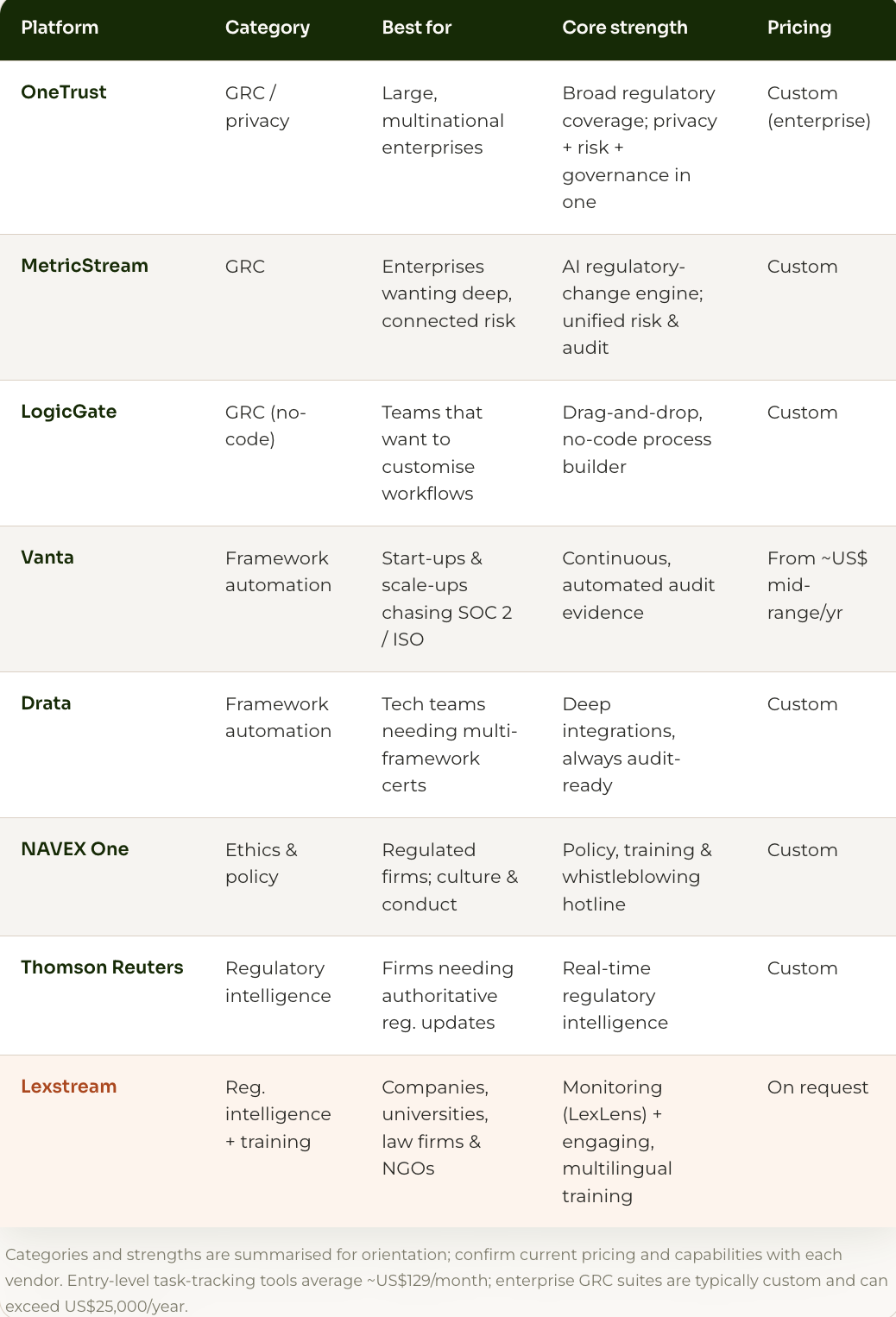
"Legal compliance software" is not one product category — it's at least four, each built around a different design philosophy. Comparing them head-to-head is a bit like comparing a scalpel to a Swiss Army knife: both are useful, but neither substitutes for the other. Many teams spend months implementing a heavyweight governance platform only to discover it can't do the one thing they actually needed — whether that's a mobile safety audit, automated audit evidence, or getting five thousand employees in nine languages to finish a policy attestation. So the useful question isn't "what's the best tool?" It's "where does my compliance risk live?" Answer that, and the shortlist writes itself. Here are the categories that matter.
These take the
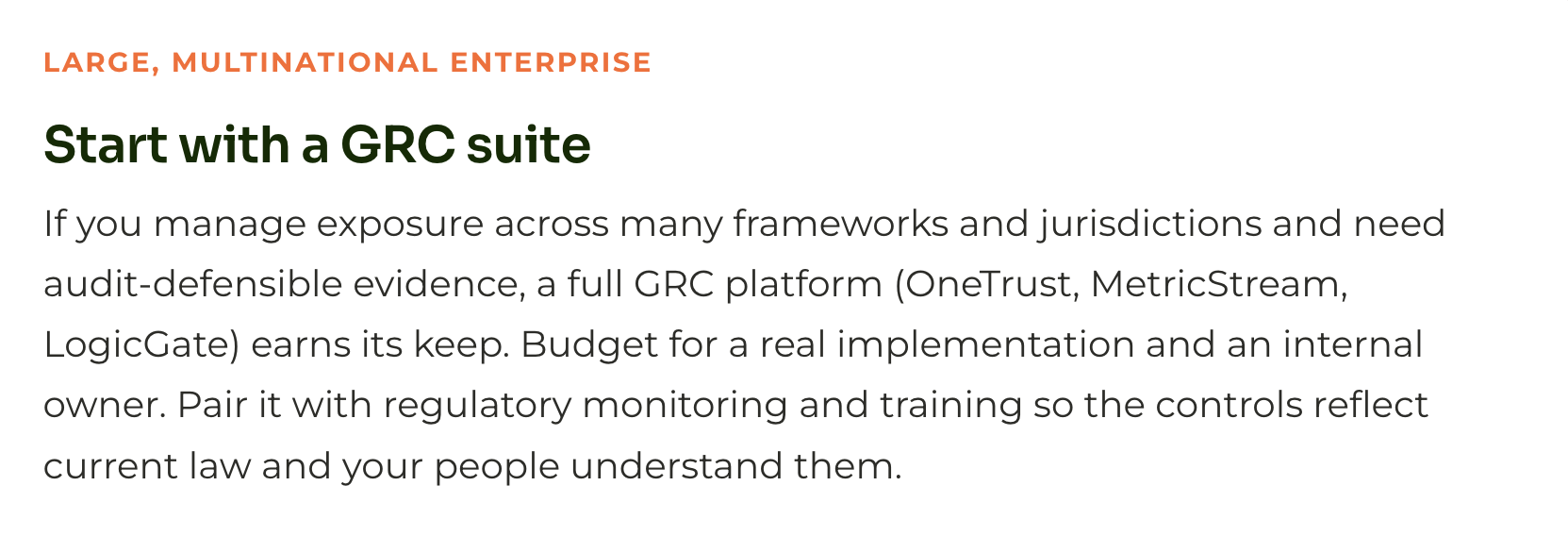
broadest view — unifying governance, risk management, audits and compliance
into one framework, mapping obligations to internal controls, and producing
defensible, audit-ready evidence. They're built for enterprise legal, risk and
IT teams managing macro-level exposure across frameworks like SOX, ISO 27001,
ISO 37301 and GDPR.
Leaders include OneTrust, MetricStream, LogicGate and Archer. Power comes at the cost of setup time and price.
Lexstream complements a GRC suite by keeping the underlying obligations current
through LexLens monitoring and turning new controls into training people
actually complete.
A newer breed
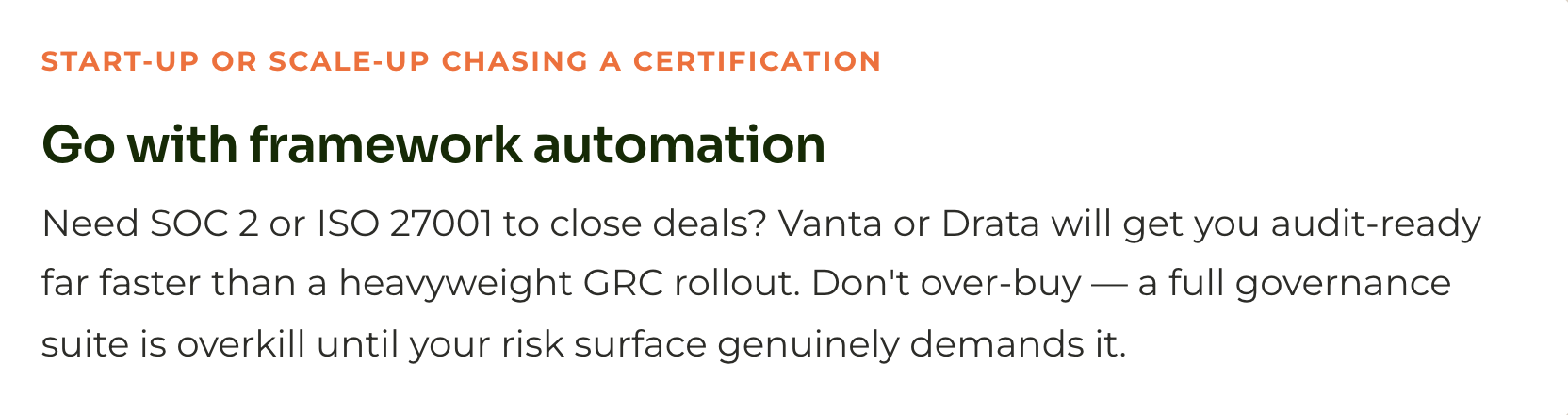
aimed at fast-growing technology companies that need a specific certification —
SOC 2, ISO 27001, HIPAA, PCI DSS — quickly. Tools like Vanta, Drata, Secureframe and Sprinto connect to your
cloud stack and collect audit evidence continuously, so you're always
audit-ready rather than scrambling once a year. Narrower than full GRC, but far
faster to value if a certification is your goal. Once a framework is in place,
Lexstream helps embed it by training staff on the policies and controls each
certification requires, in their own language.
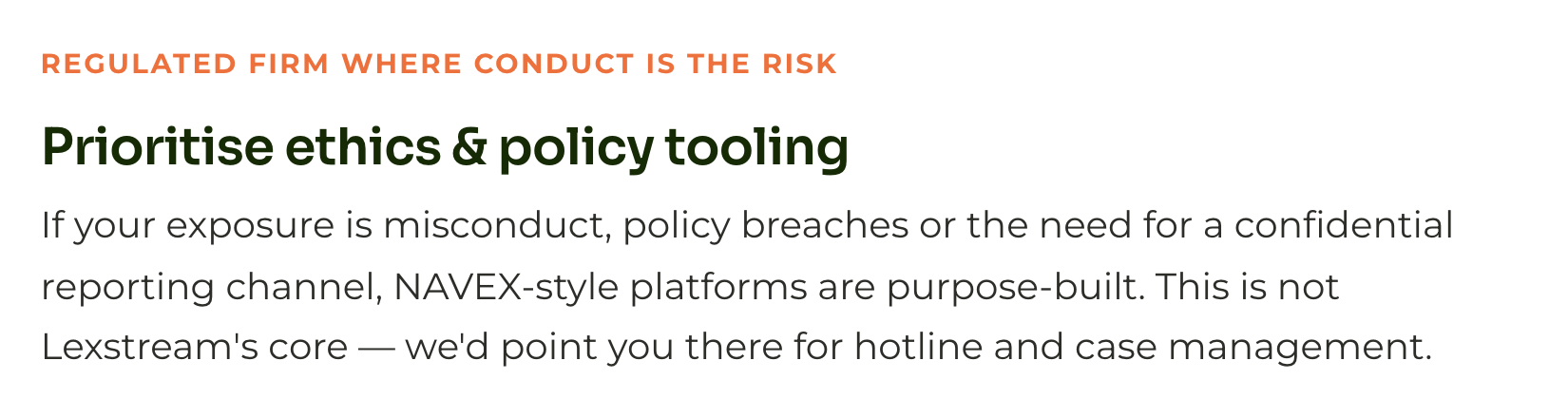
These centre on
the human side of compliance: codes of conduct, policy management and
attestations, case management, and confidential reporting hotlines. NAVEX One and SpeakUp are strong
here, bundling policy, training and speak-up channels. Essential in regulated
sectors where culture and documented process are themselves the control.
Lexstream reinforces that culture by turning codes of conduct and policies into
engaging, multilingual training that raises completion and comprehension.
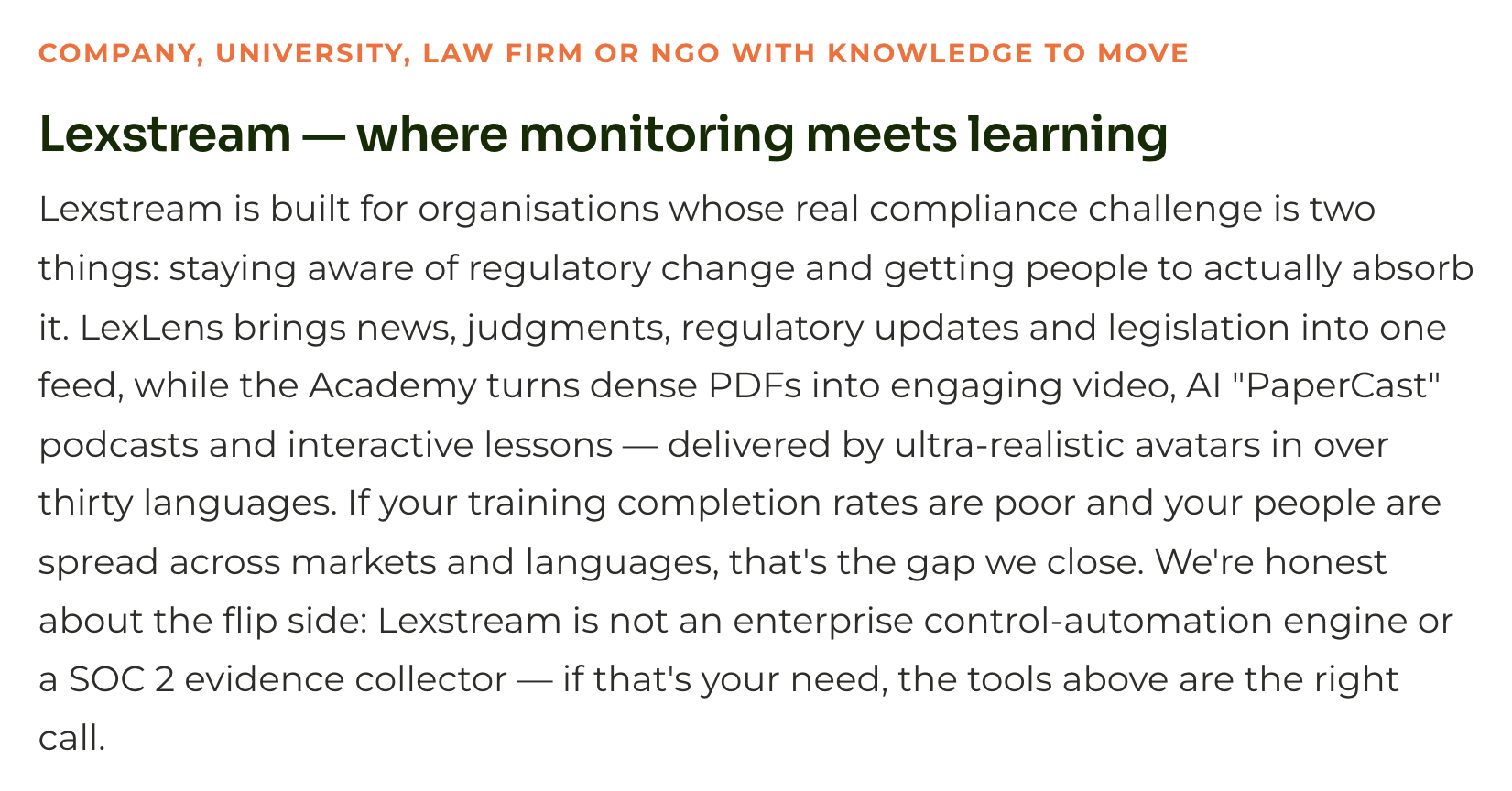
The
often-overlooked category — and the one many teams underestimate. Before you
can control a regulation, someone has to notice it changed and
then make sure the right people understand it. Regulatory-intelligence tools
monitor news, judgments, regulatory updates and legislation in one place; Thomson
Reuters is the incumbent, and Lexstream's LexLens is a focused alternative.
Alongside monitoring sits compliance training — turning dense obligations into
content people actually complete. This is where Lexstream concentrates,
pairing LexLens monitoring with an Academy that converts dense material into
video, AI podcasts and interactive lessons across more than thirty languages.